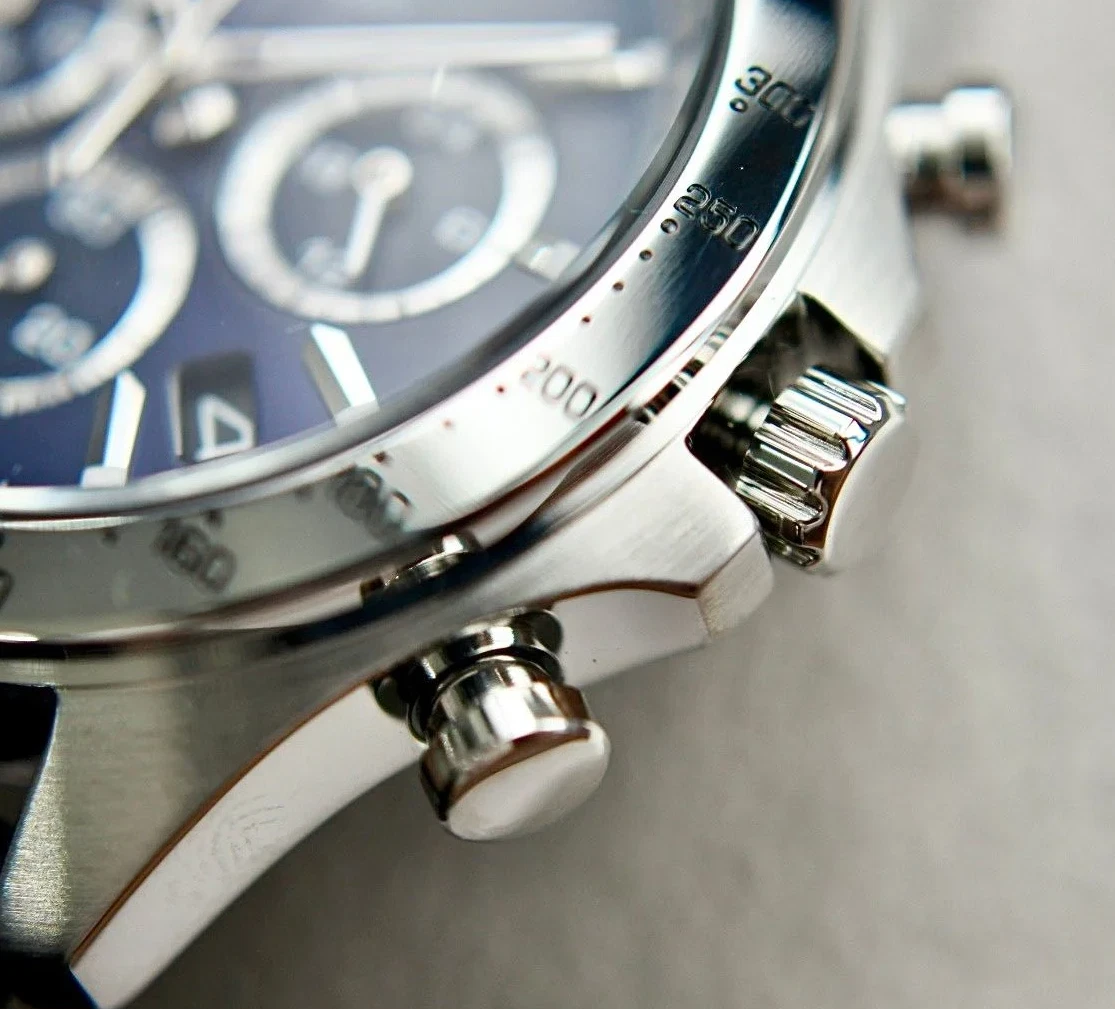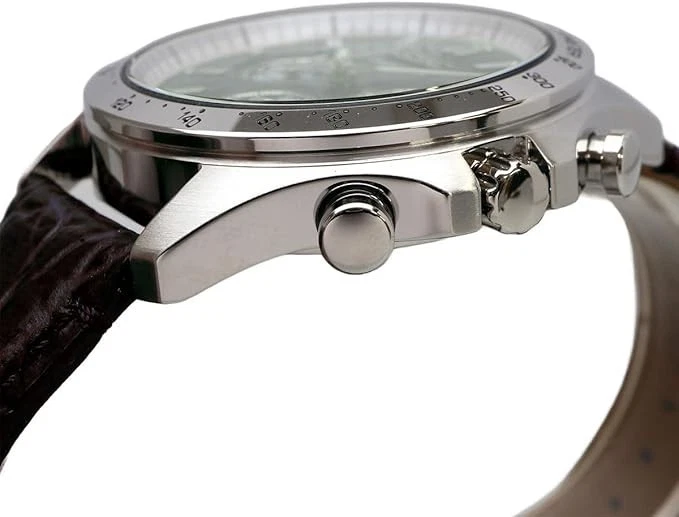
Both the SBTR017 and SBTR019 carry a 100m (10 bar) water resistance rating. That number tends to get misread in both directions -- some people assume it means diving-ready, others avoid getting the watch anywhere near water at all. Neither is quite right.
What 100m actually means
It's a pressure-test rating, not a recommended depth. In practical terms, a 100m-rated watch is built to comfortably handle everyday water exposure: rain, hand washing, showering, swimming, and light water sports at the surface.

What it's not built for
- Scuba diving or any activity involving depth and sustained pressure
- High-velocity water -- water skiing, jet skiing, or diving into a pool from height
- Adjusting the crown or pushers while the watch is wet or submerged
That last point matters more than people expect. Water resistance ratings assume the crown is fully pushed in and the chronograph pushers aren't being operated underwater. Starting or stopping the chronograph mid-swim is one of the more common ways people accidentally let water past the seals.
One thing worth knowing
Water resistance isn't permanent -- gaskets and seals can wear down gradually over years, particularly with heavy or rough use. It's not something to worry about day to day, but if a watch has taken a lot of wear over several years, it's reasonable to have the seals checked before assuming the rating still holds exactly as it did new.
The short version
Wear it in the shower, get caught in the rain, jump in the pool -- all fine. Just don't take it scuba diving, and don't be fiddling with the pushers while it's underwater.