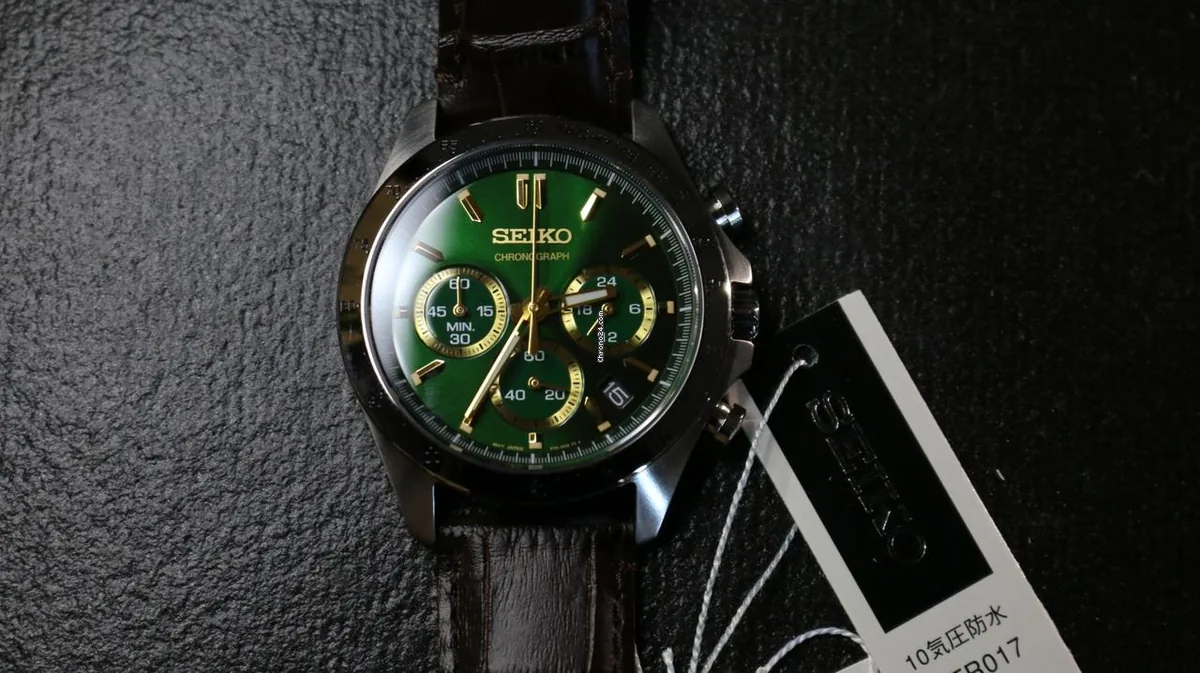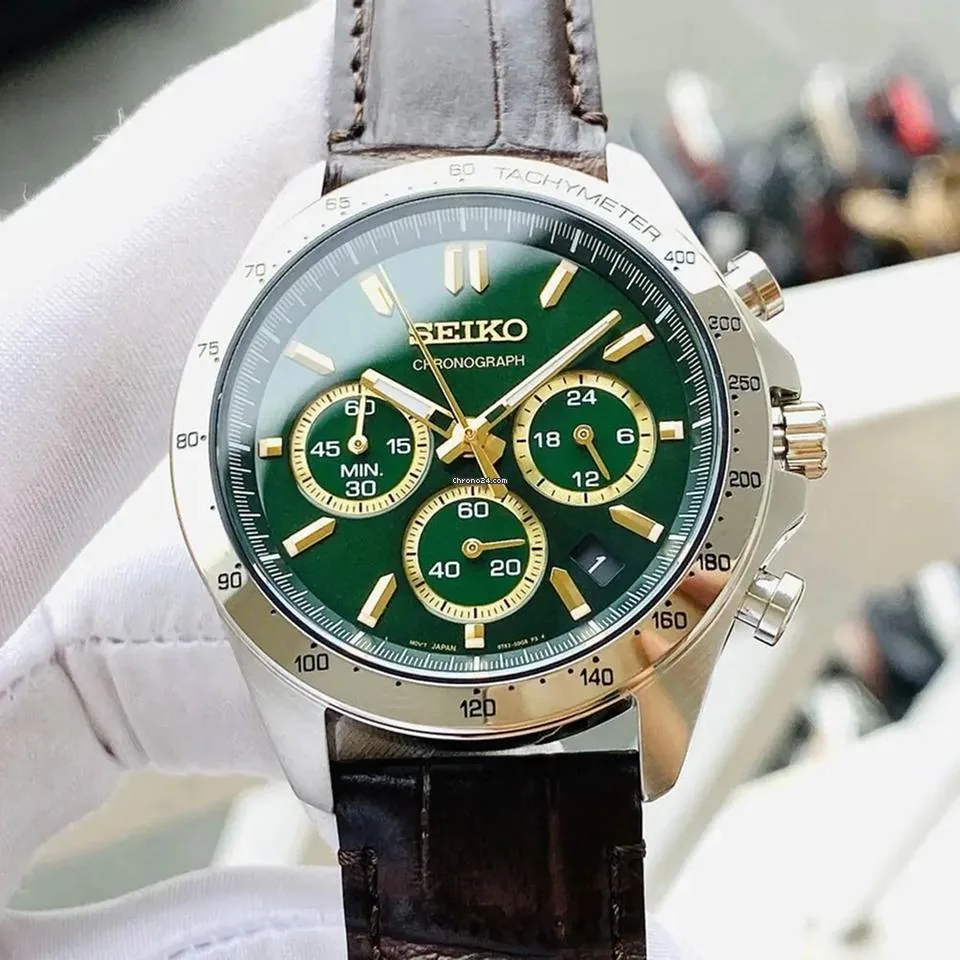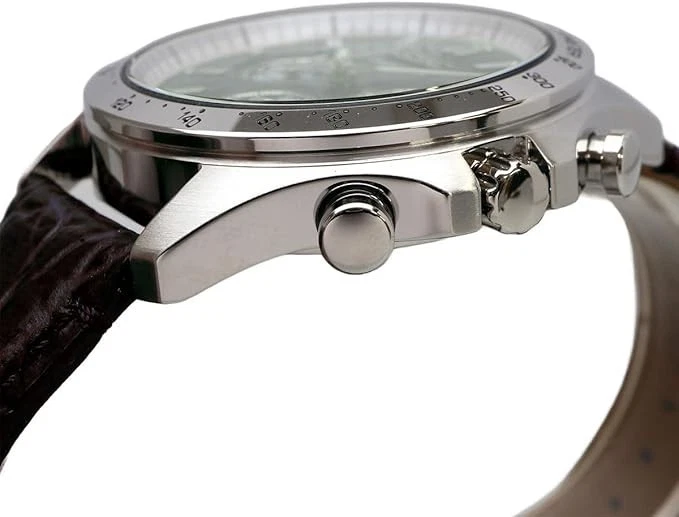
The SBTR017 and SBTR019 both use Hardlex, Seiko's proprietary hardened mineral glass. It's worth understanding what that trade-off actually buys you, especially next to sapphire crystal, which shows up in marketing copy as the obvious 'upgrade' -- it isn't quite that simple.
Scratch resistance: sapphire wins
On the Mohs hardness scale, sapphire sits at 9 -- second only to diamond. Under normal use, only another sapphire or an actual diamond will scratch it. Hardlex is more scratch-resistant than ordinary mineral glass, but it will pick up fine scratches over time in a way sapphire mostly won't.
Impact resistance: Hardlex wins
This is the part that gets left out of most comparisons. Sapphire is harder, but that hardness comes with brittleness -- it can crack or shatter under a sharp impact. Hardlex flexes slightly instead, and it's notably more resistant to cracking from a knock or a drop. For a watch that's actually worn daily rather than kept in a drawer, that's a real practical advantage.
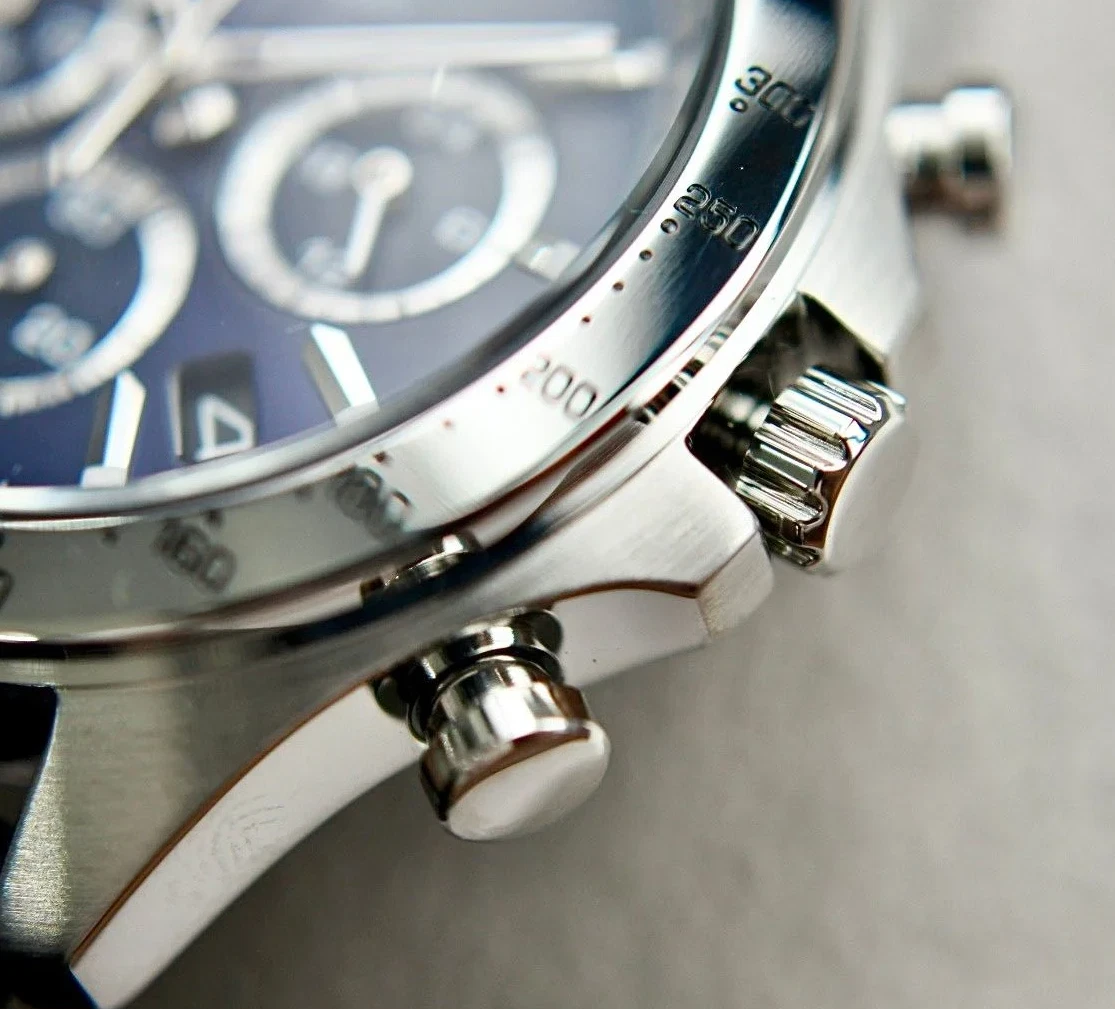
Cost
Sapphire costs meaningfully more to produce and finish, which is reflected directly in retail prices. Hardlex keeps the cost down without giving up much in day-to-day durability.
Why Hardlex is the right call here
At £299, with a chronograph you're meant to actually use -- start it, stop it, knock it against a doorframe occasionally -- Hardlex's impact resistance is arguably more useful than sapphire's scratch resistance. Fine hairline scratches on Hardlex can also be buffed out with polish in a way that's simply not possible with sapphire once it's damaged. It's less about sapphire being 'better' and more about which trade-off suits how the watch gets worn.