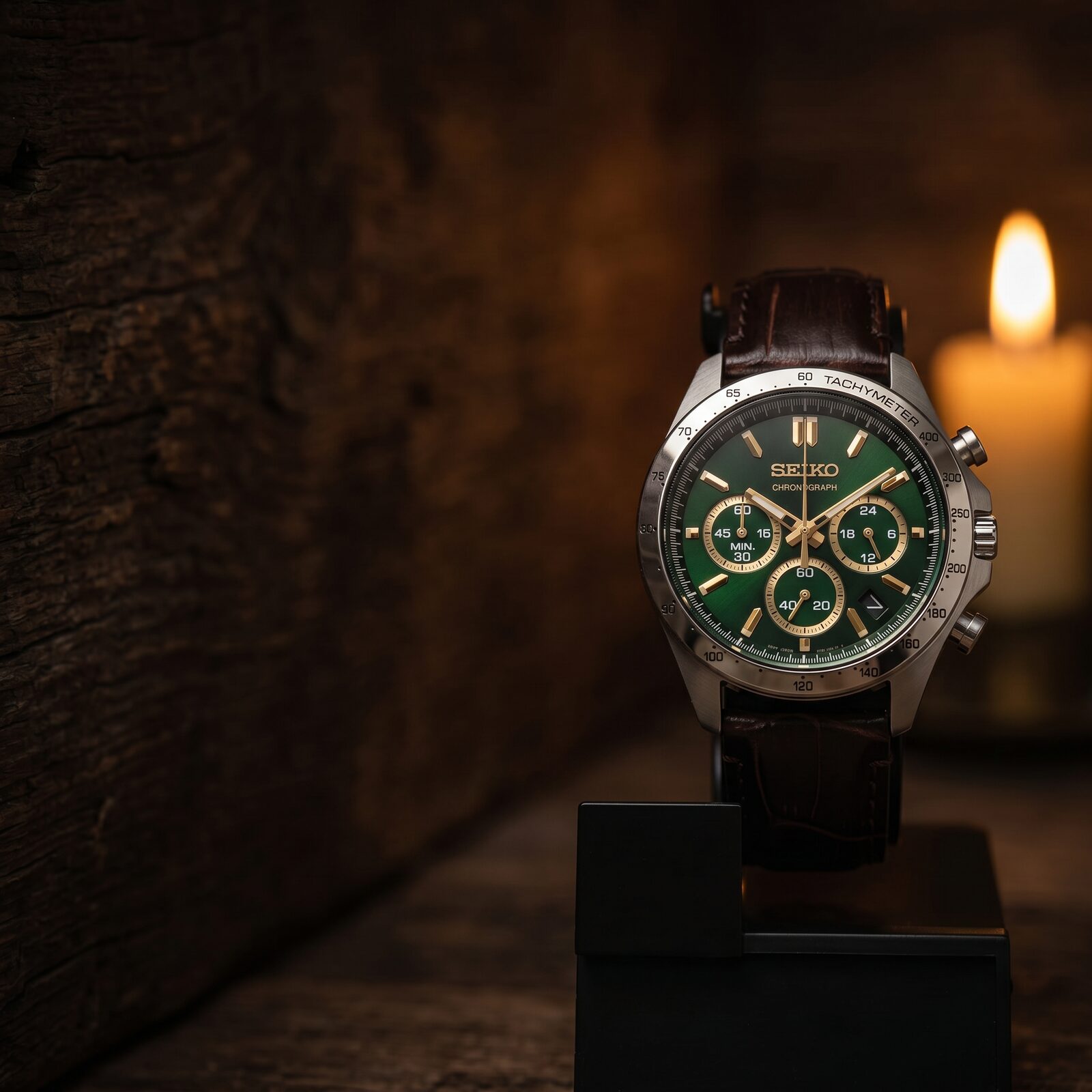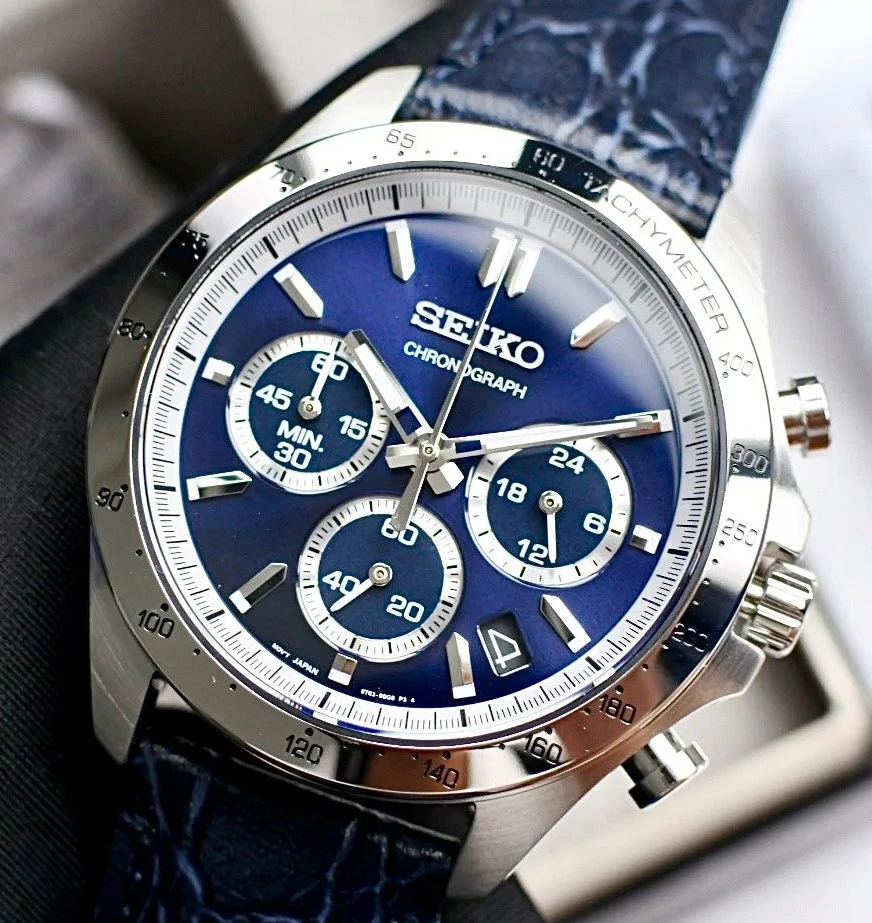
Both the SBTR017's green dial and the SBTR019's blue dial use a sunray finish -- sometimes called sunburst -- and it's the reason these dials rarely photograph the same way twice.
How a sunray dial is actually made
The dial blank, typically brass, is spun on a lathe while a fine cutting tool engraves lines that radiate outward from the center point -- literally, like rays from a sun. The technique became especially popular during the 1950s and 60s, often called watchmaking's golden age of dial design, and it's remained a mainstay of higher-end dial finishing ever since.
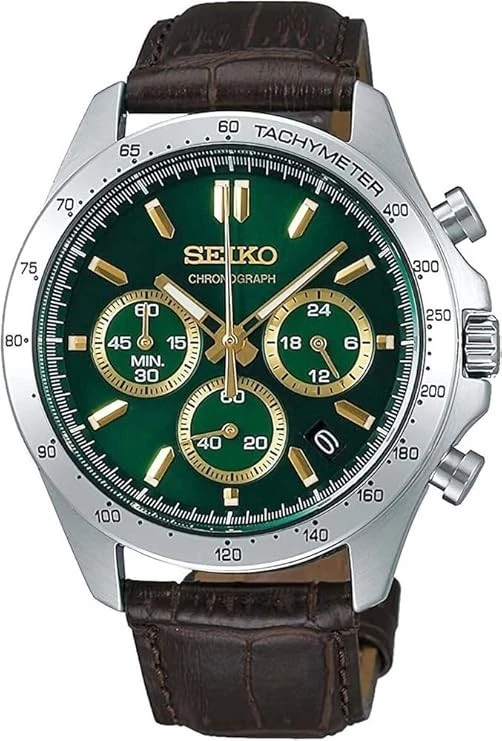
Why it changes with the light
Because every one of those engraved lines radiates from the same center point, they don't all catch light the same way at once. At any given moment, some lines are angled to reflect light back toward your eye while others aren't -- which is exactly why a sunray dial looks deep and almost matte from one angle, then flares up with a bright metallic shimmer the moment you tilt your wrist toward a window or overhead light.
Why it's worth the extra step
A flat, single-tone dial is cheaper to produce and looks the same in every photo -- consistent, but static. A sunray finish adds a manufacturing step specifically to avoid that flatness, giving the dial a sense of depth and movement that a plain finish can't replicate. It's a small, deliberate detail, but it's the kind of thing that separates a dial you glance at from one you actually notice.
It's also why photos of the SBTR017 and SBTR019 online can look slightly different from one listing to the next -- the sunray effect is genuinely light-dependent, not a rendering inconsistency.