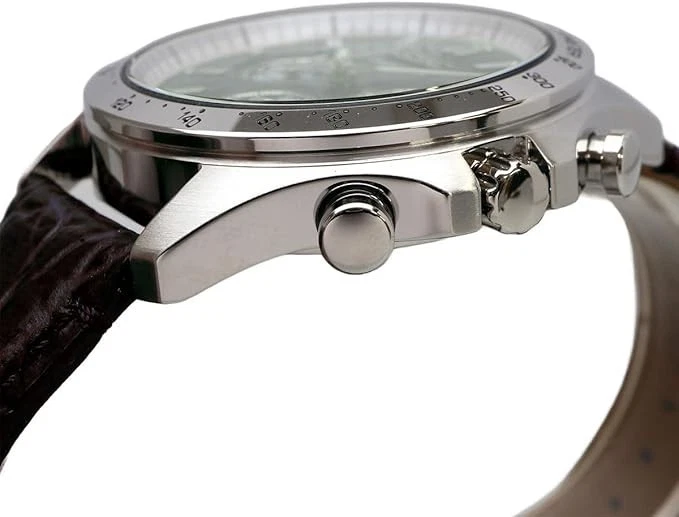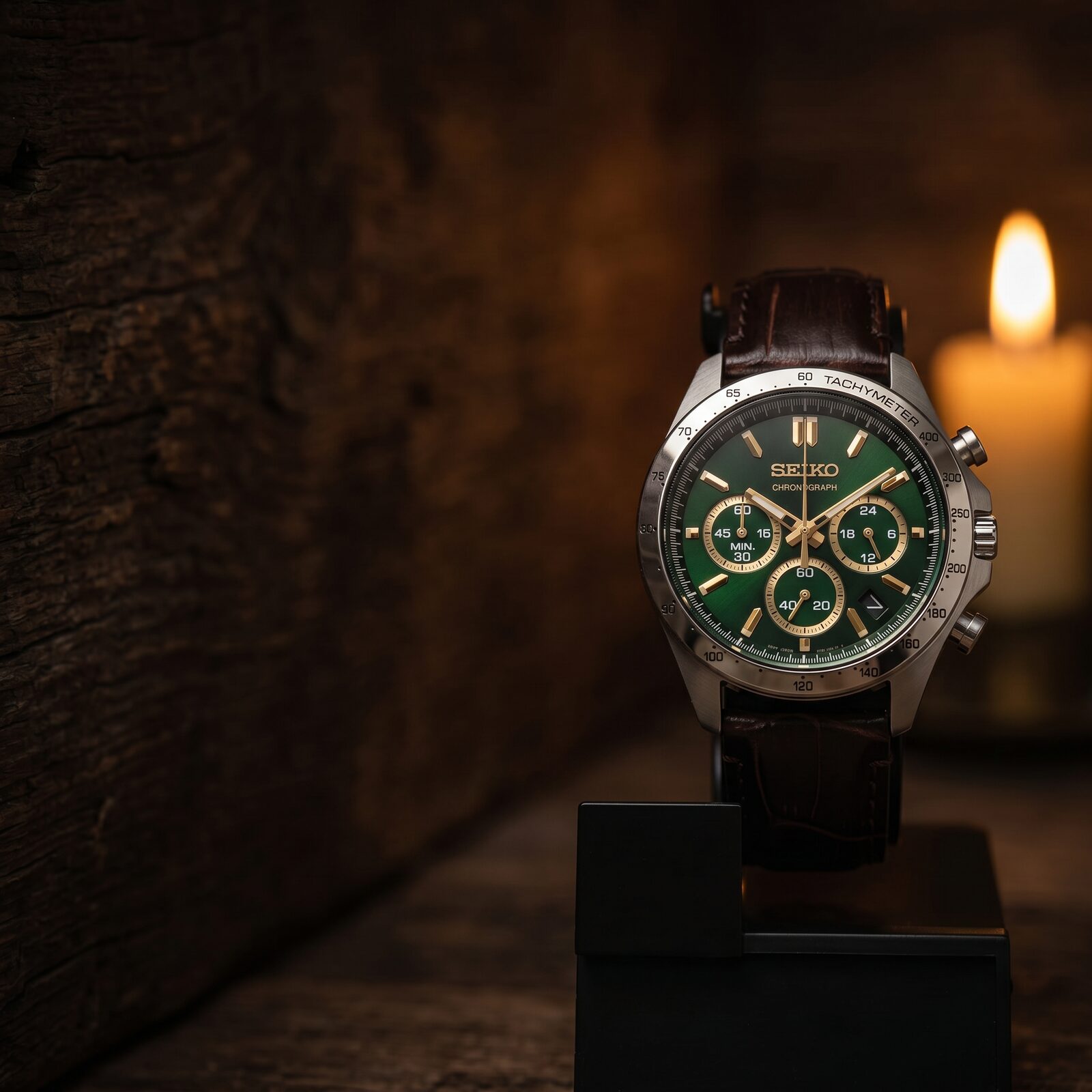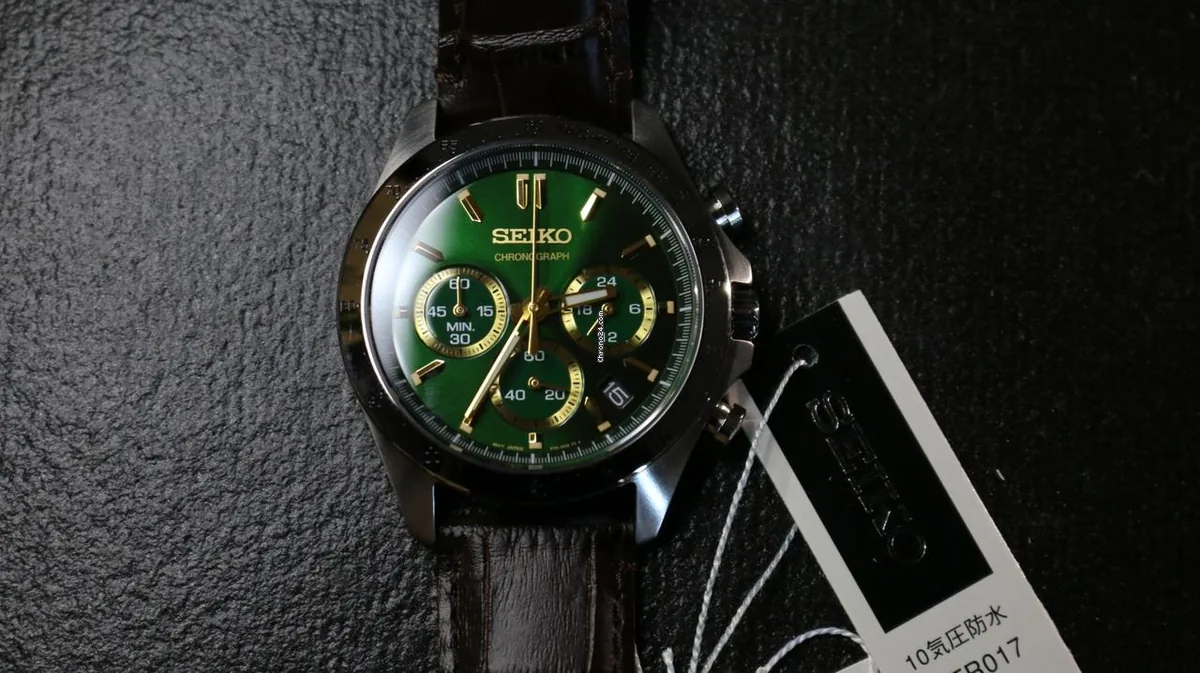
This comes up in nearly every conversation about buying a Seiko chronograph, so it's worth answering directly: quartz and automatic movements aren't better or worse than each other, they're built for different priorities.
Accuracy
Quartz wins outright here. A quartz movement like the 8T63 inside the SBTR017 and SBTR019 typically holds accuracy to around 15 seconds a month. Automatic movements are commonly rated anywhere from +/-3 to +/-15 seconds per day -- and that figure drifts further as the watch ages and the lubricating oil inside thickens over years of use.
Upkeep
An automatic needs to be worn or wound regularly to keep running, and it wants a full service every three to five years by a watchmaker to stay accurate. A quartz movement asks for a battery change every few years and otherwise just runs -- no winding, no power reserve to think about, no servicing schedule to track.
Cost and complexity
Automatic movements cost more to produce, largely because of the mechanical complexity and hand-finishing involved, and that cost gets passed on in the price. Quartz movements are simpler to manufacture and keep the price of the finished watch down without cutting corners on the parts you actually interact with -- the case, crystal, dial, and strap.
Why it's the right fit for a chronograph specifically
A chronograph is a stopwatch you wear. The whole point is being able to trust it to start at zero and read correctly when you stop it -- and that's exactly where quartz's steady, drift-free accuracy matters more than an automatic's mechanical prestige. It's a practical choice, not a compromise.